
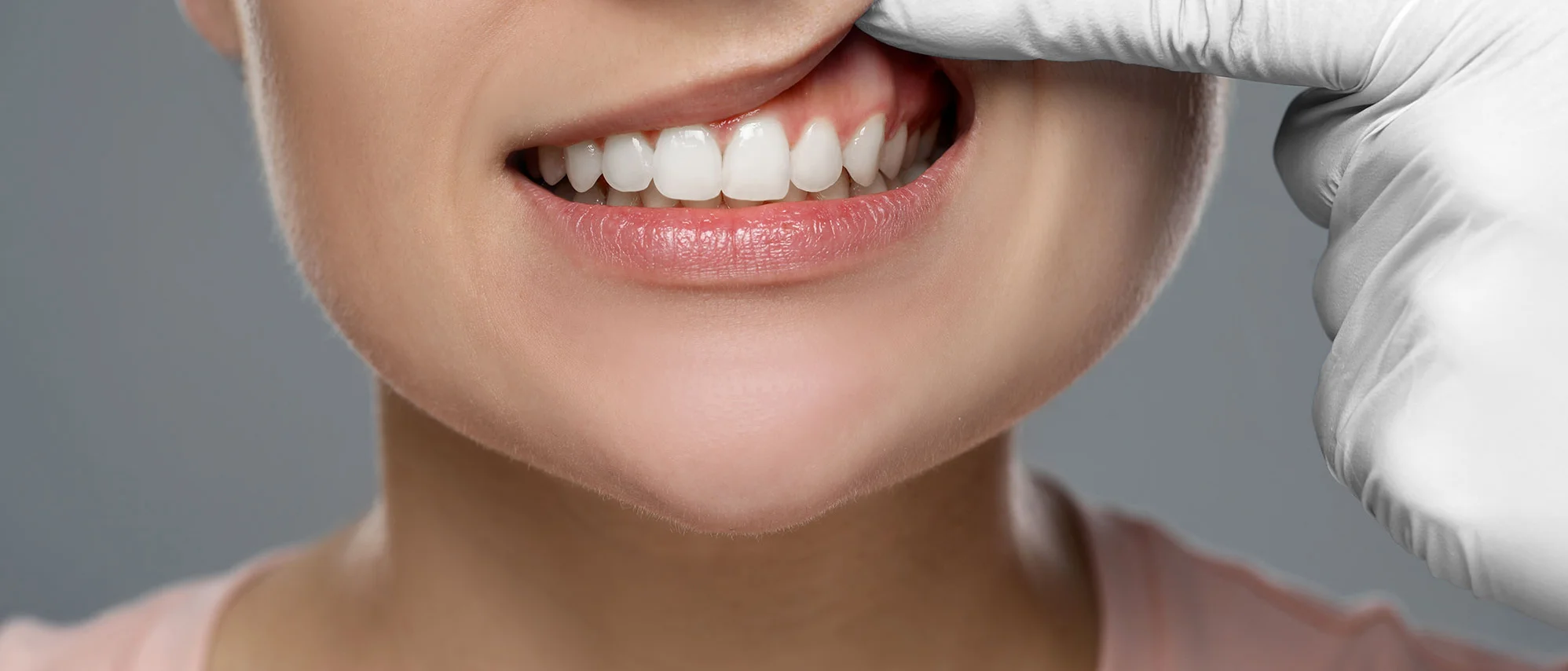
Improvement of oral hygiene in Regensburg
Healthy gums for long-term tooth preservation.

Systematic periodontitis treatment consists of several steps: improving oral hygiene by instructing proper dental care, removing plaque and deposits on the teeth and below the gumline. Regular check-ups and lifelong follow-up care help prevent tooth loss.
We treat inflammation of the gums and periodontium in several clear steps – from cleaning and oral hygiene instruction to ultrasonic scaling, surgical therapy and regular follow-up care.







Gingivitis is an inflammation of the gums (gingiva), usually caused by bacteria, and a preliminary stage of periodontitis, i.e. an inflammation of the entire periodontium, which in the worst case can end in tooth loss. Gingivitis not only has a negative impact on oral health, but like any focus of inflammation it can also have a negative influence on the general state of health and should therefore definitely not be left untreated over a longer period of time.
The first step in gingivitis therapy is professional tooth cleaning (PZR). Here, not only are the most stubborn soft and solid bacterial plaque removed, but the teeth are also polished so that bacteria have a much harder time attaching themselves. In addition, any gum pockets are cleaned and disinfected.
Afterwards, consistent and thorough oral hygiene is necessary. Twice a day, the teeth should be cleaned with a fluoride toothpaste. In addition, plaque in the interdental spaces should be removed with dental floss and interdental brushes. Regular check-ups can detect and treat gingivitis at an early stage.
gentle, systematic and regenerative with individual aftercare
Periodontitis is a chronic, multifactorial, inflammatory disease of the periodontium associated with bacterial plaque and characterized by progressive destruction of the periodontium. A distinction is made between apical periodontitis (originating from the root apex) and marginal periodontitis (originating from the gingival margin). The two types of periodontitis can also merge into each other (paro-endo-lesions).
The therapy consists in eliminating the inflammatory state of the gums and periodontium and removing plaque and tartar, as well as factors that promote inflammation and the pathogenic bacterial flora. The treatment is divided into different phases with different measures.
In the so-called hygiene phase, all hard and soft plaque above the gum line is removed by a professional dental cleaning (PZR). During this process, the patient is also shown how to perform optimal dental care at home. This step usually has to be repeated. In addition, fillings must be placed or renewed if necessary during this phase and teeth that are not worth preserving must be extracted in order to eliminate further bacterial foci in the oral cavity. Bacterial growth can be reduced by using various rinsing liquids or medications. These hygiene measures alone can lead to a noticeable improvement in many patients.
The closed treatment phase then begins, during which the hard and soft plaque lying below the gum line is removed. This is done with hand instruments as well as with sonic and ultrasonic devices. After one to two weeks of healing, the result of this treatment is checked by assessing the healing of the gums and, if necessary, repeating the measures on individual areas.
After 3-6 months, the long-term result is checked by measuring the probing depths of the gum pockets again. In addition, a thorough cleaning is carried out above the gums and, if necessary, individual pockets can be cleaned deeper again. This regular check-up is carried out regularly depending on the degree of the disease.
In the case of very deep gum pockets, which have not receded sufficiently through the hygiene measures and the closed treatment, it may be necessary to switch to the open treatment phase. In this case, the gum pockets are opened and the roots of the teeth are cleaned, also using minimally invasive methods such as ultrasound. Thanks to the most modern methods, such periodontal surgery procedures can be performed very gently today. Under certain conditions, it makes sense to supplement the treatment with the use of antibiotics.
After periodontitis treatment, lifelong maintenance therapy is necessary, consisting of regular oral hygiene by the patient and equally regular professional dental cleanings. The latter should be performed every 3-6 months depending on the severity of the disease.
Ultrasonic Scaling
The latest ultrasonic technology generally allows plaque and tartar to be removed safely, gently and carefully. In contrast to hand instruments, the root surface is less modified and less tooth structure is removed. Patients find treatment with ultrasonic instruments less stressful and painful.
If a closed periodontitis treatment is no longer sufficient for the therapy of periodontitis, a so-called periodontal surgery may be necessary for the long-term preservation of the teeth. In this case, the gingival pockets are opened and the roots of the teeth are cleaned, also using minimally invasive methods such as ultrasound. Thanks to the latest surgical methods, such oral surgery procedures can be performed very gently today.
Bacteria determination
A germ test is a painless test to determine bacteria that can be carried out as part of periodontal treatment. It determines which types of bacteria colonise the gum pockets. The test even identifies the pathogens in the early stages of the disease. The laboratory then makes a recommendation for individual targeted therapy.
For the germ test, samples are taken from certain suspicious gum pockets using a paper tip and analysed by a laboratory. Most of the bacteria found are harmless; even certain pathogens that secrete metabolic toxins do not pose a threat to a well-functioning immune system. However, there are also aggressive germs that can lead to periodontitis. These are also detected during bacterial identification and can then be treated.
Antibiotic therapy
If particularly aggressive germs are found during bacterial identification, they must be killed with targeted antibiotic treatment. This is because they can replace the healthy bacterial flora of the oral cavity with a predominantly gram-negative anaerobic flora, as is typical for dental bed inflammation. Which special antibiotics are used here is recommended by the analysis laboratory after microbiological evaluation of the germ test sent in.
Gingivitis is an inflammation of the gums only and is therefore a preliminary stage. If left untreated, it can develop into periodontitis – an inflammation of the entire periodontium, which in the worst case can lead to tooth loss. For this reason, gingivitis should not be left untreated for long periods of time.
The treatment is carried out in several stages: First, during the hygiene phase, the area above the gums is thoroughly cleaned and home oral hygiene is improved. This is followed by the actual (closed) periodontitis treatment, during which we remove plaque and deposits below the gum line. We then check the healing process and pocket depth and plan the follow-up care.
Because all accumulated soft and hard deposits must first be removed so that the gums can heal. At the same time, we will show you how to properly clean your teeth and interdental spaces at home – this is an integral part of the therapy.
Here, the deposits in the gum pockets below the gum line are removed using hand instruments and sonic or ultrasonic devices. The gums are then given time to heal, and we check the results.
Periodontitis is a chronic disease. To prevent it from flaring up again, gum pockets and oral hygiene must be checked regularly and plaque removed. Depending on the severity, we therefore recommend follow-up appointments every 3–6 months.
Only if aggressive bacteria are detected in the germ test or if the inflammation does not subside sufficiently in other ways. In this case, antibiotic therapy can support the actual periodontitis treatment.
Consistent oral hygiene at home, combined with regular professional teeth cleaning and check-ups at our practice in Regensburg, are the best way to prevent gum inflammation from developing into periodontitis in the first place – or to ensure that treated periodontitis does not recur.